When does working time actually starts and ends? Is it working time, when you have to change into special work wear or if you go on a business trip? And what are the maximum working hours? Many answers to that, you find in the German Working Time Act (Arbeitszeitgesetz, ArbZG). It protects the health of employees and governs daily and weekly maximums, breaks, rest periods and more. This article explains which times the employer has to pay, what rights employees have, and how to record working time correctly.
Calculate your severance payment
Calculate the settlement amount for your individual case in 2 minutes
Key points at a glance:
- The Working Time Act (Arbeitszeitgesetz) protects the health of employees by setting daily and weekly limits, rest periods, breaks etc. It does not regulate payment.
- In the employment contract the parties agree on the begin, end and duration of working hours as well the payment. The content of the contract must be within the statutory limits.
- Breaks and commuting time generally do not count as working time.
- Standby services or business trips is generally working time, which the employer has to pay.
- Overtime is working time. The employer has to pay or give time off. Blanket lump-sum clauses are often invalid.
- Employers have to record working time. Mandatory digital time tracking is currently in the pipeline.
Contents
Contractual working time
If it comes to the question, what counts towards working time, an employee must always keep two main aspects in mind, which might lead to different results:
- First, there are the statutory rules in the Working Time Act (Arbeitszeitgesetz, ArbZG). Its “only” purpose is to protect the health of employees. Therefore it set limits to daily and weekly maximum working hours, minimum rest periods, breaks, night and shift work etc. Note: It does not regulate the payment of working time. More on that below.
- Second, there are the contractual rules in the employment contract or collective agreements (Tarifvertrag/Betriebsvereinbarung). Employees and employers are free to agree on their working hours, provided they stay within the statutory limits set by the ArbZG. Here the parties agree on the start, end and duration of work as well as the payment of the working time.
The start and end of working time are usually straightforward. There are a few grey areas, where it isn’t obvious whether the time counts as paid working time. Some examples:
Free initial consultation with a lawyer
Quick callback after 1 to 2 hours for a free initial consultation with a lawyer
Work interruptions
Interruptions to work that fall within the employer’s responsibility. It is working time and the employer must pay. Examples: machine breakdowns, supply problems, power cuts, factory fires, natural disasters or official closures1 that affect the specific business rather than the general public.
Breaks
Breaks are purely for recovery and are not working time. The employer may not interrupt breaks or keep the employee on standby during a break. If they do so, it’s no longer a break but working time.
Commuting time
Commuting time covers the trip from the employee’s home to the workplace and back. It doesn’t count as working time. It is unpaid.
Travel time for field workers
The Federal Labour Court decided, that travel time for a field worker (Außendienstmitarbeiter) from home to the first customer, and back home from the last customer, is working time and the employer must pay.2
Business trips
The Federal Labor Court (BAG) ruled that travel time to and from business trips constitutes working time. For air travel, this includes the flight time plus the time to and from the airport as well as the time spent checking in and retrieving luggage. Example: The employer sends a technical employee to USA on a temporary assignment. Here, the travel time needed for the outbound and return is paid working time.3
Standby duty (Bereitschaftsdienst)
Standby duty is time during which the employee has to remain either on the employer’s premises or at another specified location and must be ready to start work at any moment. In this case the employer dictates, where the employee stays. Therefore it is working time and the employer must pay. Because the actual workload is lower, the parties may agree on a reduced rate.
On-call duty (Rufbereitschaft)
With on-call duty the employee agrees to start work when called upon. Here, employees can pick where they stay during the on-call period and notify the employer beforehand. During that time they are free to pursue their own activities, but they must remain reachable at all times. In practice this means they need to be able to take up work without significant delay. The rule of thumb is one hour, though it can be shorter periods. Employment contracts or collective bargaining agreements often spell it out explicitly. On-call duty is working time and the employer has to pay.

Free initial consultation with a specialist lawyer
- Free initial consultation with a lawyer
- Quick callback after 1 to 2 hours
- Strategy for negotiating the severance pay
Changing and washing time
If the employee has to wear specific work clothes and cannot wear them on the way to work, the time you need to change your clothes at the workplace is already working time and the employer has to pay.5 The same applies to any washing time that is required by law or collective agreement.
Flexi-time arrangements (Gleitzeit)
The parties can agree on flexi-time either in the employment contract or a collective agreement. There are numerous flexi-time models, and employees can ask their works council or HR department how it works in the company. Most models feature core hours during which the employee has to work. Outside those core hours, there is a flexible window for starting and finishing the day. Depending on the model, the employee can also vary how long they work on a given day and balance it out on other days. If the employer dismisses the employee, who still has a surplus or minus in hours, see our articles on plus hours and minus hours.
Overtime
Employees do not have an obligation to work overtime, if not agreed otherwise in the employment contract, a collective agreement. Where employees actually work overtime, the employer has to pay the standard rates plus overtime premiums, if agreed on.
Employment contracts often contain clauses that “any overtime is covered by the gross monthly salary“. Blanket lump-sum clauses like this are mostly invalid. A valid clause must clearly specify how many overtime hours are covered, when overtime has to be worked etc. If the employee ends up in a dispute over a specific clause, they should seek legal advice.
Reducing working hours
Employees and employers can also agree to reduce working hours. For more on this, see our article on the right to part-time work.

Calculate severance pay now free of charge
- Calculate potential severance payment amount
- Strategy for negotiating a fair severance payment
- Find suitable lawyers for labour law
Statutory working time rules
The Working Time Act has the main purpose to protect the employees’ health. It does not deal with the payment of working time.
According to the Working Hours Act (ArbZG), working time is the period from the start to the end of work, excluding breaks, when an employee must perform work determined by the employer and subject to their instructions.6 The definition what counts to working time is mainly influenced by the European Court of Justice.
The Working Time Act allows for a vast number of exceptions, so it is advisable for employees to check with the works council, trade unions or an employment lawyer. Here’s an overview of the main rules:
Daily maximum working time
The daily working time may not exceed 8 hours.7 It can be extended to a maximum of 10 hours, provided that the average over a six-month period does not exceed 8 hours per working day. Collective bargaining agreements can provide for different rules.
Weekly maximum working time
The weekly maximum hours are currently 48 hours, break times not included.8
Breaks
The Working Time Act sets the following rules on breaks:9
- Breaks do not count as working time. They are in addition to the 8-hour day.
- The parties must agree on breaks in advance.
- Working between 6 and 9 hours triggers a minimum break of 30 minutes.
- Working more than 9 hours requires a 45-minute break.
- Breaks can be split into segments of at least 15 minutes each.
- Employees cannot work more than 6 hours in a row without a break.
Rest periods
Rest periods10 are not to be confused with breaks. They are the periods between the end of one working day and the start of the next:
- Employees are entitled to an uninterrupted rest period of at least 11 hours.
- In certain sectors, such as hospitals and care work, statutory or collectively agreed rules can are different.
- Employees should contact the works council or their union for specific information.
Work on Sundays and public holidays
Employees may not be employed on Sundays and statutory public holidays.11 There are numerous exceptions in law or collective agreements. If employees may work on a Sunday, at least 15 Sundays per year must remain work-free. Employees have the right to a substitute rest day within two weeks.
Night and shift work
The Working Time Act provides the following on night and shift work12:
- Working time on a working day for night and shift workers may not exceed 8 hours. It can only be extended to up to 10 hours if the average over a four-week window does not exceed 8 hours per day.
- Night and shift workers have the right to a medical examination at the start of the employment and thereafter within any three-year period. The costs are borne by the employer.
- Night and shift workers can request a transfer to a daytime position where (1) their health is at risk, (2) a child under the age of twelve lives in their household, or (3) they have a family member in need of care living in their household. Operational requirements must also be taken into account. The works council can suggest transfer options.
- Employers have to give night and shift workers either paid days off or an “appropriate night work premium“. The Federal Labour Court considers a premium of 25% on the relevant gross hourly rate to be appropriate.13 This only applies if not otherwise agreed.
Free initial consultation with a specialist lawyer
- Free initial consultation with a lawyer
- Quick callback after 1 to 2 hours
- Strategy for negotiating the severance pay
Recording working time
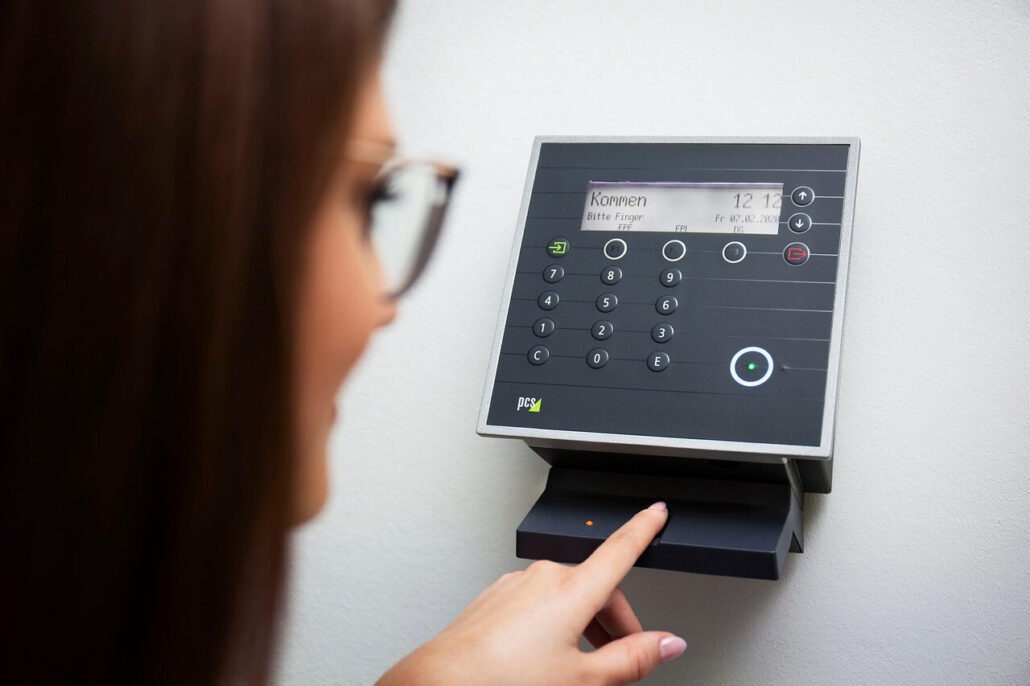
Employers must record the start, duration and end of working time, including overtime and breaks.14 The employer can decide how (paper, digital, punch clock etc.). Where a works council exists, a works agreement (Betriebsvereinbarung) must be entered into. The content applies directly to the employment contract.
If you have questions about how to record your own working time, take them up with your line manager or the works council. What matters here are the specific in-house arrangements.
If the employer breaches these obligations, they can face a fine.15
The current coalition is planning to make digital time tracking mandatory in 2025/26. The details are until now (August 26) still unclear. Trust-based working time (Vertrauensarbeitszeit) should still be possible without formal time recording. This is actually against the judgements of the European Court of Justice.
Fraud while recording working time
Forgetting to clock out for a cigarette break, entering the wrong figures in the time recording system can quickly get labelled as working time fraud. The risk for employees is high. It might start with a written warning up to a (summary) dismissal, and even criminal consequences.
Working time fraud only exists when the misconduct is on purpose, and not just negligent. The employer has to prove the fraud. Unlawful surveillance (such as monitoring software installed without consent) can render the evidence worthless.
Employees should put any effort in to clarify possible misunderstandings. If that is not possible, they should contact an attorney for legal advice. If the employer struggles to prove the allegations, or if the allegations are wrong, there are also good chances of a continued employment or at least a fair severance pay.
Frequently asked questions
Free initial consultation with a specialist lawyer
- Free initial consultation with a lawyer
- Quick callback after 1 to 2 hours
- Strategy for negotiating the severance pay
- BAG 4.05.2022, 5 AZR 366/21 ↩︎
- BAG 18.03.2020, 5 AZR 36/19 ↩︎
- BAG 17.10.2018, 5 AZR 553/17 ↩︎
- BAG 20.04.2011, 5 AZR 200/10 ↩︎
- BAG 19.09. 2012, 5 AZR 678/11 ↩︎
- Section 2 ArbZG, Article 2 European Working Time Directive ↩︎
- § 3 ArbZG ↩︎
- Article 6 European Working Time Directive ↩︎
- Section 4 ArbZG ↩︎
- Section 5 ArbZG ↩︎
- Section 9 ff. ArbZG ↩︎
- Section 6 ff. ArbZG ↩︎
- BAG 15.07.2020, 10 AZR 123/19 ↩︎
- BAG 13.09.2022, 1 ABR 22/21; Sections 16 ArbZG, 3 ArbSchG ↩︎
- Sections 22, 23 ArbZG ↩︎